CLAWBACK / Guides / Black Friday 2026
Black Friday & Cyber Monday 2026: Will Your Reseller Sales Actually Be Profitable?
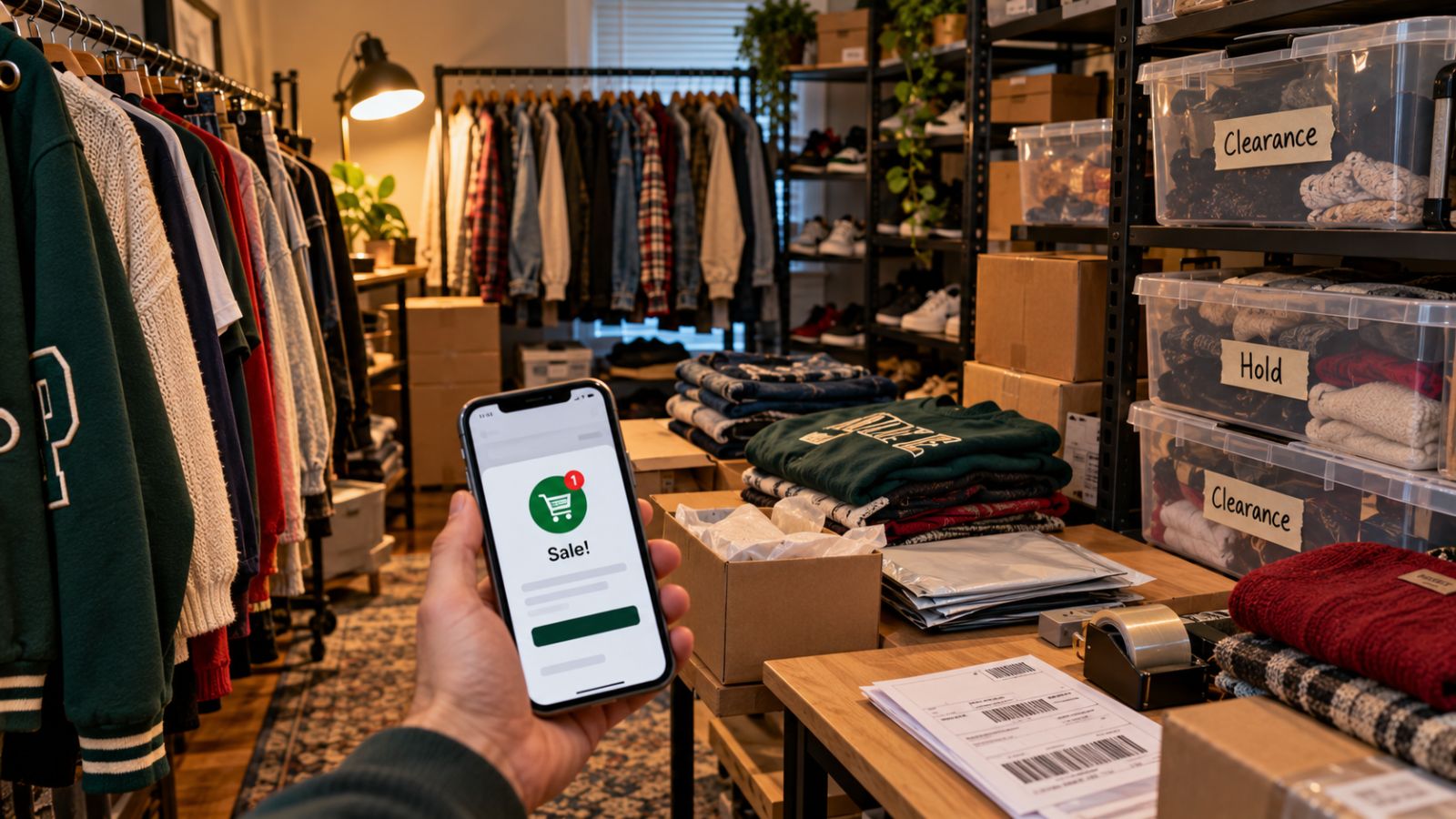
Black Friday can bring resellers an opportunity to move old inventory, attract bargain hunters, and generate cash before the end of the year. But there is one problem many sellers overlook: more sales do not automatically mean more profit.
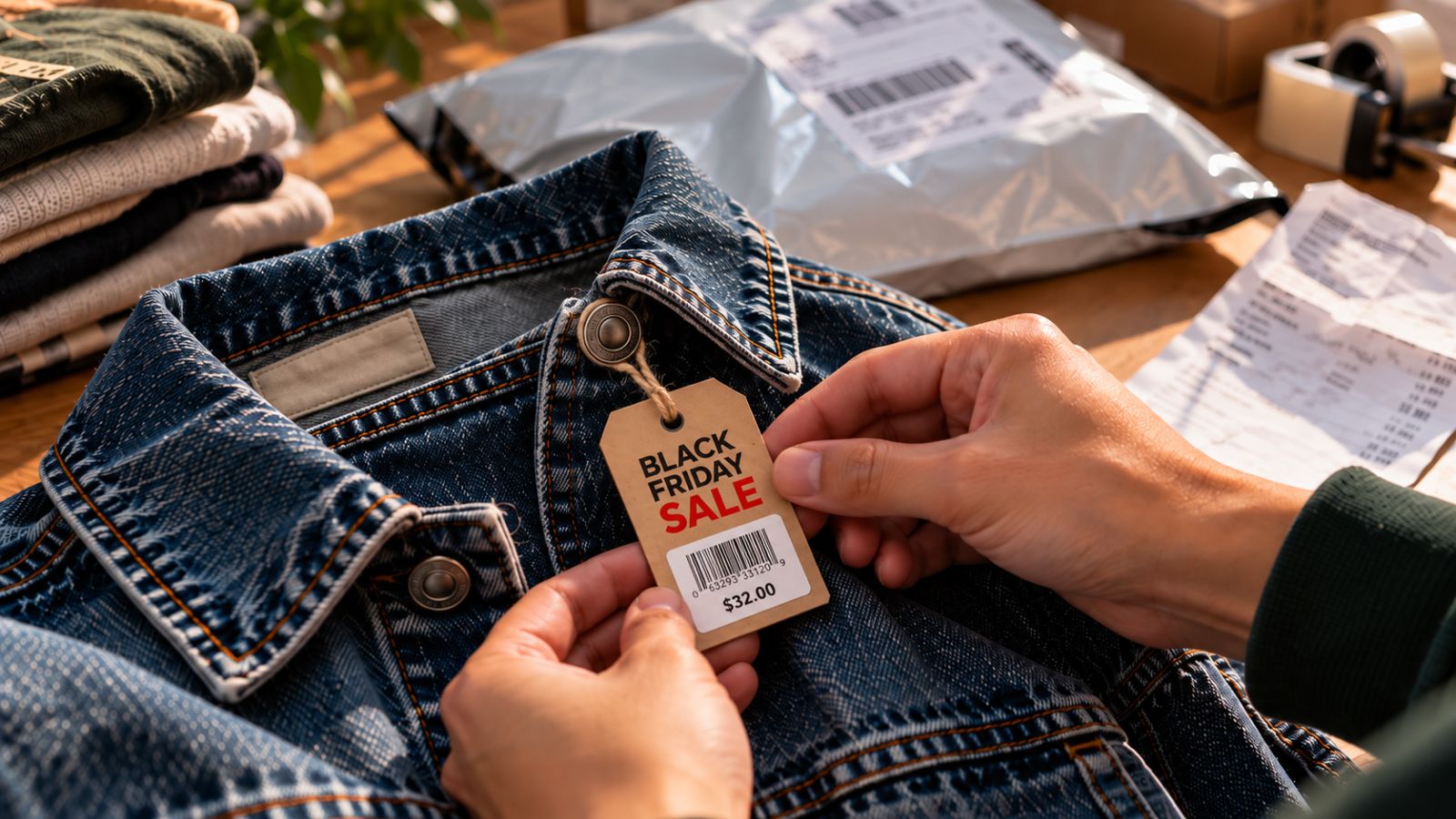
Imagine selling a jacket for $80 after lowering its price from $100. The order comes through, your inventory decreases, and your sales dashboard looks encouraging. But after product costs, marketplace fees, shipping, and packaging, how much money do you actually keep?
Now imagine the buyer returns it.
Depending on the marketplace, refund, fee-credit rules, shipping responsibilities, and the condition of the returned item, the financial outcome can be very different from what you expected.
That is why Black Friday deserves more than a quick price cut.
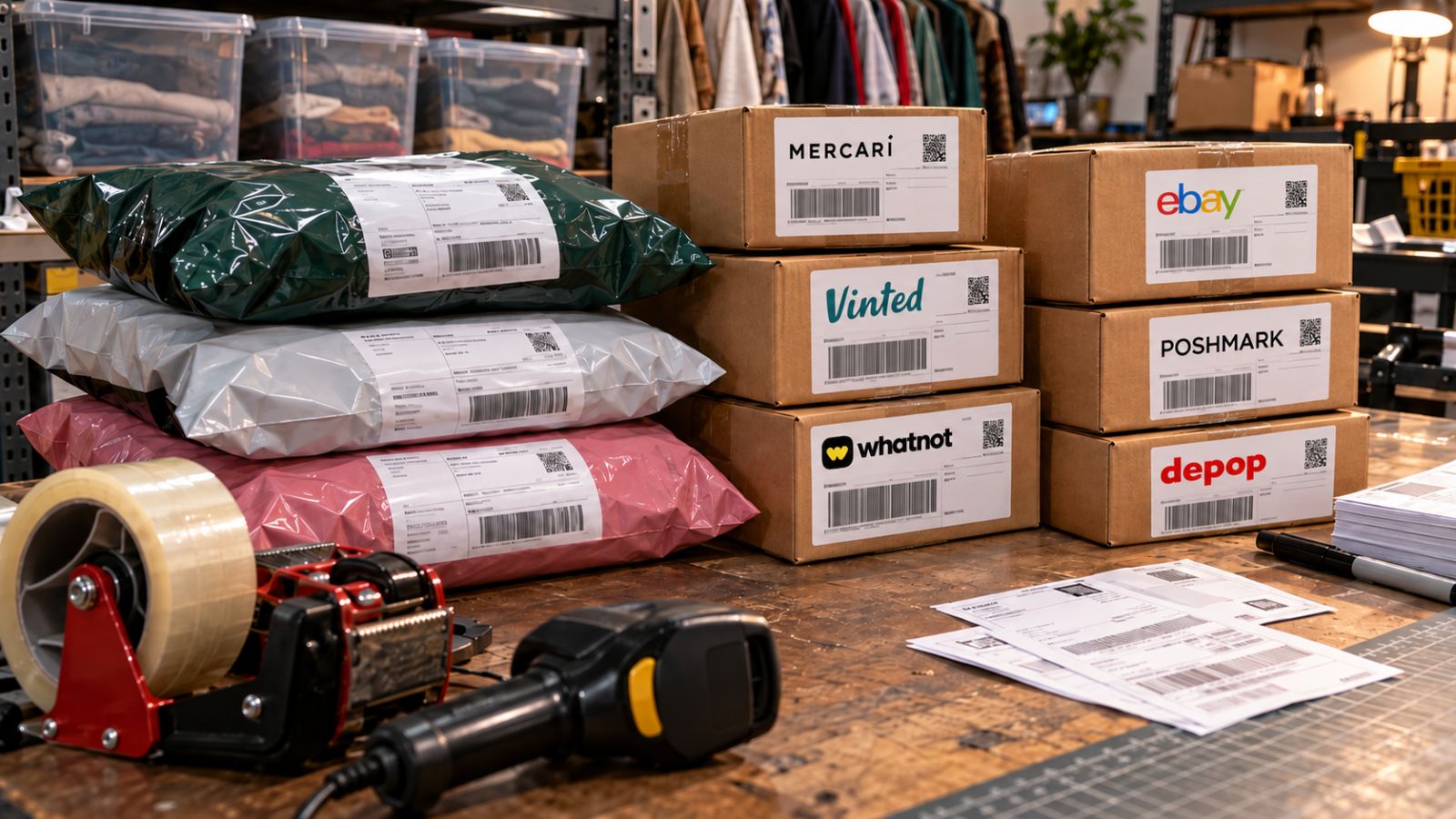
In this guide, you will learn how to identify inventory worth discounting, calculate your minimum acceptable price, choose promotions that fit your margins, prepare for shipping and returns, and compare the practical considerations across eBay, Poshmark, Mercari, Depop, Whatnot, and Vinted.
Before you lower your prices for Black Friday, check what the discount could leave you with. A promotion should support your business goals—not leave you wondering where your profit went.
Black Friday falls on Friday, November 27, 2026, and Cyber Monday falls on Monday, November 30, 2026. Use the time before these dates to prepare rather than making rushed decisions when orders start arriving.
What Could Go Wrong When You Discount for Black Friday?
The biggest mistake is treating the discount percentage as the whole calculation.
A 20% discount might be manageable for an item with a healthy margin. The same discount could wipe out most of the profit on another item.
Your actual result depends on several factors:
- Product cost: How much you paid to acquire the item.
- Marketplace fees: Which selling and payment-processing charges apply to the transaction.
- Shipping: Whether you pay for outbound shipping or absorb a shipping promotion.
- Packaging: The supplies and materials needed to fulfill the order.
- Demand: Whether the lower price is likely to generate enough additional sales to justify the reduction.
- Returns and refunds: Whether a later problem creates additional costs or reduces the amount you recover.
- Inventory goals: Whether your priority is maximum profit, freeing up cash, or clearing stock that has been sitting for months.
Before launching a promotion, answer five questions:
- Which items can afford a discount?
- What is the lowest price you can reasonably accept?
- Which promotion makes sense for each item and marketplace?
- Can you fulfill the orders and handle potential problems?
- How will you know whether the promotion actually worked?
Answer these questions first. Your pricing decisions become much easier when you know the numbers behind them.
1. Before You Discount Anything, Separate Your Inventory Into Four Groups
Not every item in your store needs the same strategy. A seller clearing older clothing has different priorities from someone selling rare collectibles, electronics, or high-demand sneakers.
Start by sorting the inventory you are considering for Black Friday.
Group 1: Items with healthy profit margins
These items may have enough room to support a limited discount while leaving an acceptable amount after costs.
Possible approaches include a percentage discount, a targeted offer, or a bundle promotion.
Before choosing one, calculate the expected net amount at the proposed selling price. A healthy margin gives you flexibility, but it does not make every discount worthwhile.
Group 2: Items with thin margins
These items deserve more caution.
A discount that appears small to a buyer can remove a large share of your profit when the product cost, fees, and fulfillment expenses remain largely unchanged.
Consider leaving the price alone, accepting only a smaller offer, or encouraging a bundle if the combined order economics work.
Do not discount an item simply because other sellers are doing it. Their acquisition costs, fee arrangements, and profit targets may be completely different from yours.
Group 3: Older or slow-moving inventory
Items that have been listed for months may be suitable for a clearance promotion.
However, compare the expected net proceeds with the alternatives. Selling old stock for a lower profit may make sense if freeing up cash or storage space is valuable to your business.
That does not mean every low-margin sale is a good decision. You still need to understand what you will recover and what you will give up.
Group 4: Items that already sell consistently
If buyers are already purchasing an item at its normal price, discounting it might reduce your profit without generating enough additional demand to compensate.
Check relevant sold listings, competing inventory, and recent buyer interest before changing the price.
What should you track before choosing a discount?
Create a simple inventory sheet with these fields:
| Field | Why it matters |
|---|---|
| Current listing price | Establishes your starting point |
| Acquisition cost | Shows how much you invested |
| Estimated marketplace costs | Helps estimate net proceeds |
| Shipping and packaging | Identifies fulfillment expenses |
| Minimum acceptable price | Establishes your discount floor |
| Listing age | Helps identify slow-moving stock |
| Demand and competition | Helps prioritize items |
| Planned promotion | Records the offer you intend to test |
You do not need an elaborate spreadsheet. You need enough information to avoid making a pricing decision based on the discount percentage alone.
The goal: Identify which items can attract a buyer at a lower price without undermining the financial result you want.
2. How a 20% Black Friday Discount Can Cut Your Profit by 43%
This is where many resellers can misjudge the numbers.
A 20% price reduction does not necessarily mean a 20% reduction in profit. When fixed costs remain unchanged, profit can fall much faster than the selling price.
Consider this illustrative eBay transaction.
The $100 item that sells for $80
| Order economics | Normal sale | Black Friday sale |
|---|---|---|
| Selling price | $100.00 | $80.00 |
| Product acquisition cost | $35.00 | $35.00 |
| Assumed marketplace and transaction costs | $13.00 | $11.00 |
| Shipping paid by seller | $8.00 | $8.00 |
| Packaging | $2.00 | $2.00 |
| Estimated profit | $42.00 | $24.00 |
Illustrative calculation only. The marketplace costs are assumed figures, not a statement of actual eBay fees. Actual charges depend on the applicable category, transaction details, and seller arrangements.
The selling price falls by 20%, from $100 to $80.
But the estimated profit falls from $42 to $24—a reduction of approximately 43%.
Why? Because the product cost, shipping, and packaging do not necessarily decrease when you lower your price.
The sale might still make sense if it generates enough additional orders or helps you clear inventory you no longer want to hold. But you should make that decision deliberately.
How many extra sales would you need to make up the difference?
Suppose you normally sell 10 similar items and earn an estimated $42 per item.
Your total profit would be:
10 × $42 = $420
After discounting, estimated profit falls to $24 per item.
To exceed the original $420, you would need:
$420 ÷ $24 = 17.5 sales
That means you would need 18 discounted sales to exceed the original total, assuming the per-item estimates remain the same.
You would be selling almost twice as many items to surpass the original profit.
How do you calculate your minimum acceptable price?
Start with this principle:
Minimum acceptable price = the amount needed to recover your relevant costs and achieve your desired profit, adjusted for applicable fees.
Percentage-based marketplace fees can make the calculation more complicated than simply adding costs together. Fixed charges, shipping arrangements, and other transaction expenses can affect the result as well.
Before publishing an offer:
- Estimate the proceeds at the proposed sale price.
- Subtract the costs that apply to the transaction.
- Compare the result with your minimum acceptable profit.
- Reduce the discount, change the promotion, or leave the price unchanged if the numbers do not work.
You do not need to win a race to the lowest price. You need a price that makes sense for your inventory and your business.
CLAWBACK tip: Use the CLAWBACK Return Loss Calculator when you want to estimate the financial impact of a return on a supported marketplace. It addresses return-related losses; it is not a replacement for a separate calculation of ordinary discount profitability.
3. Which Black Friday Promotion Makes Sense for Your Inventory?
A percentage discount is only one option. Depending on the marketplace and your inventory, you may be able to use offers, bundles, shipping incentives, or other promotional features.
The right choice depends on what you want to achieve.
Percentage discounts: Are you giving away more profit than necessary?
Percentage discounts are easy for buyers to understand. They can be useful when an item has enough margin, your price is competitive, or you want to move selected inventory.
Before choosing a discount, check:
- Whether the item has enough margin to absorb the reduction.
- Whether comparable items are priced competitively.
- Whether the proposed price meets your minimum.
- Whether the promotion has a clear purpose.
A deeper discount is not automatically a better deal for your business.
Targeted offers: Can you lower the price without discounting everything?
Where the marketplace provides a suitable offer feature, you may be able to test a lower price with selected buyers rather than reducing the listing price for everyone.
For example, if an item is listed at $80, you might consider offering it for $72 instead of changing the public listing price.
Before sending the offer, check that the resulting amount remains acceptable after applicable fees and costs. Review the marketplace's current rules for offers, shipping, and promotions.
Bundle discounts: Does a larger order actually leave you with more money?
Bundles may encourage buyers to purchase more than one item from the same seller.
Imagine a buyer considering a $20 shirt who is also interested in a $25 pair of jeans. A bundle offer might make purchasing both items more attractive.
But calculate the combined order rather than focusing only on the discount percentage.
Ask yourself:
- Does the combined price cover both acquisition costs?
- Will the items fit within the expected shipping arrangement?
- Will packaging or shipping expenses increase?
- Is the combined profit acceptable?
A larger order is not automatically a more profitable order.
Free shipping: Who is really paying for the discount?
Free shipping may simplify the buyer's decision, but the expense does not disappear. If you absorb it, it becomes part of your cost.
Suppose an item sells for $60 and you pay $8 to ship it. If you also reduce the selling price to $50, you have reduced revenue by $10 while retaining the shipping expense.
That combination might work for an item with a healthy margin. It may be risky for a low-priced item.
Compare the complete order economics before combining free shipping with another discount.
What if you do not need to lower the price?
You can also consider improving the listing, making measurements clearer, using accurate condition details, bundling complementary items, or promoting suitable inventory through channels you already use.
These steps do not guarantee more sales or greater visibility. They can, however, help buyers understand what they are considering and reduce avoidable confusion.
When should you skip the Black Friday discount?
Consider leaving an item at its normal price when:
- Its profit margin is already very small.
- It is selling consistently at its current price.
- You cannot estimate the applicable costs confidently.
- Absorbing shipping would make the transaction unattractive.
- You are matching competitors without understanding your own costs.
- A return would create an especially difficult financial outcome.
You do not have to discount every item to participate in the holiday selling season.
4. eBay, Poshmark, Mercari, Depop, Whatnot, and Vinted: What Should Sellers Check First?
Using the same discount across every marketplace without checking the details can lead to misleading calculations.
Your selling price might be similar across channels, but fees, shipping arrangements, promotional tools, and return exposure can differ.
The following guidance reflects the saved platform-policy and fee references supplied for this article. It is a planning guide, not a guarantee that every seller has access to the same promotional features or faces identical transaction rules.
eBay: Calculate your net proceeds before matching another seller's price
eBay selling fees can vary according to category, listing arrangements, and transaction details. Your saved eBay Selling Fees reference describes a final value fee calculated using the total amount of the sale, plus a per-order fee. The applicable percentage and other charges can vary.
Before discounting:
- Compare your item with relevant sold listings.
- Calculate expected net proceeds at the proposed price.
- Review shipping costs and handling time.
- Check whether an available offer or promotional feature fits your item.
- Consider the possible financial impact of a return or refund.
Do not assume every category has the same fee percentage.
The return risk matters, too. Your saved eBay return guidance states that when an item is damaged, faulty, or does not match its listing description, the seller generally has to accept the return and cover return shipping, even if the seller does not normally offer returns. For a change-of-mind return, responsibility depends on the seller's return policy.
Your saved fee-credit reference also distinguishes between eligible refunds and cancellations. Eligible partial refunds may result in proportional credits for certain fees, but not every refund qualifies for every credit. The fixed per-order fee is not credited in some scenarios, and certain case outcomes are excluded.
Black Friday takeaway: Check your category-specific costs, shipping arrangements, return exposure, and fee-credit eligibility. Do not assume a refund will return every original fee.
Poshmark: Could a bundle work better than discounting every item?
Your saved Poshmark policy materials describe seller-configured discounts and bundle-related selling features. These can be worth considering when the combined order makes financial sense.
Before running a promotion:
- Identify items that work well together.
- Review your current seller discount settings.
- Calculate the economics of the combined order.
- Make sure the items remain available.
- Avoid blanket discounts on inventory with limited margins.
Bundles are most useful when the buyer gets an attractive offer and the seller retains an acceptable result.
Prepare for returns accurately. Your saved Poshmark refund-policy reference states that buyers generally have 72 hours after delivery to open a return case for covered issues, and approved returns must be shipped back within five days of approval to qualify for a refund. The saved policy identifies issues such as undisclosed damage, incorrect or missing items, items not as described, and authenticity concerns.
The saved seller-policy reference also emphasizes accurate descriptions, original photos, and prompt fulfillment using Poshmark-provided shipping labels.
Black Friday takeaway: Check bundle economics, describe items accurately, use the required shipping label, and retain relevant order and condition records.
Mercari: Are you using the fee rules that apply to your listing?
Your saved Mercari fee reference distinguishes between listings created or updated before January 6, 2025, and those created or updated on or after that date.
For the newer listing rules described in that document, the seller-paid selling fee is 10% of the item price plus buyer-paid shipping. The same reference states that no separate payment-processing fee applies to listings created or updated under that newer structure. Older listings can have different rules until updated.
Before choosing a discount:
- Check which fee rules apply to your listing.
- Estimate proceeds after applicable seller-paid costs.
- Review shipping and packaging needs.
- Check the offer and promotion options currently available in your account.
- Leave room for possible return or shipping problems.
Black Friday takeaway: Do not reuse an old fee calculation without checking whether it applies to the listing and transaction.
Depop: Zero selling fees do not mean zero transaction costs
Your saved Depop US fee reference states that US sellers do not pay a Depop selling fee under the described fee structure. It lists Depop Payments processing at 3.3% + $0.45 on the item sale price, shipping, and applicable taxes. A boosting fee may also apply when a listing is boosted under the applicable rules.
Before discounting:
- Compare the item with relevant sold listings and current competition.
- Use clear photos and accurate brand, size, condition, and measurement details.
- Review the offer or discount tools available in your account.
- Calculate profit after applicable processing and promotional costs.
- Update or remove cross-listed inventory promptly after a sale.
Your saved US shipping reference distinguishes between using Depop Shipping and arranging shipping yourself. If you use Depop Shipping, follow the generated-label instructions. If you arrange your own shipping, use a tracked service and add tracking as required.
The saved help material also describes a ten-day period for specified shipping or tracking actions before an order may be automatically canceled and refunded. Follow the method and instructions applicable to the actual order.
Black Friday takeaway: Account for processing, boosting if applicable, shipping, and potential return costs. No selling fee does not mean the transaction is cost-free.
Whatnot: Set your minimum price before the live sale begins
Whatnot's selling experience can involve live shows and other marketplace-specific selling formats. A strategy that works for a fixed-price listing may not work for a live selling session.
Your saved Whatnot commission reference describes rates that vary by category, market, and sales tier. It also separates commission from payment-processing fees. Do not assume every seller pays one universal commission rate.
Before selling:
- Choose which items you want to feature.
- Set your minimum acceptable price before bidding or selling.
- Organize inventory so each item can be identified accurately.
- Calculate applicable commission and processing costs.
- Check current shipping and seller-protection requirements.
- Avoid letting the pace of a live show push you into an unacceptable price.
Shipment confirmation matters. Your saved Whatnot Shipping Policy states that sellers must ship within two business days, excluding weekends and holidays, and that an accepted carrier or platform drop-off scan is important evidence of shipment. The saved Seller Protection reference warns that late shipping without valid drop-off confirmation can expose a seller to refund costs in the circumstances described by the policy.
The saved Seller Protection material also makes clear that a refund does not automatically mean the seller was at fault. The platform considers the evidence and circumstances.
Black Friday takeaway: Know your minimum price, calculate the applicable fees, follow the shipping requirements, and retain tracking and condition evidence.
Vinted: Check whether your intended selling activity is permitted
Your saved Vinted Terms and Conditions, applicable from October 8, 2026, describe the US service as intended for users who use it for personal benefit and not for professional purposes.
That restriction matters for an article aimed at resellers. The saved terms do not establish that professional reselling is permitted.
Do not assume that a zero-seller-fee structure makes Vinted suitable for every commercial resale operation. Review the applicable terms before relying on it for business activity.
The saved terms also describe international transactions and note that additional responsibilities may apply when transactions cross borders.
If you are using Vinted within the permitted scope of your account, review the applicable shipping instructions, listing requirements, and terms before changing prices or accepting a transaction.
Black Friday takeaway: Confirm that your intended activity is allowed before planning a promotion. Zero seller fees do not override restrictions on how the service may be used.
Quick comparison: Which costs deserve your attention?
| Marketplace | Main planning priority | What to verify |
|---|---|---|
| eBay | Sold comparisons and net proceeds | Category-specific fees, shipping, return rules, fee-credit eligibility |
| Poshmark | Bundles and seller discounts | Discount settings, shipping labels, return requirements |
| Mercari | Net proceeds | Listing-specific fee rules, shipping, returns |
| Depop | Listing quality and targeted offers | US processing fees, boosting, shipping method, tracking |
| Whatnot | Show preparation and minimum prices | Category- and tier-dependent commission, processing, shipping confirmation |
| Vinted | Confirm permitted use first | US personal-use terms and applicable conditions |
The same discount percentage can produce different results on different marketplaces. Calculate the expected outcome for the platform where the item sells—and confirm that your planned selling activity is permitted under its applicable terms.
5. Cross-Listing Could Turn One Sale Into Two Orders—Here Is How to Prevent It
Cross-listing can help sellers reach buyers on multiple marketplaces. But it creates an inventory-management risk when an item sells on one platform and remains available on another.
Imagine a jacket is listed on eBay and Depop. A buyer purchases it on eBay, but the Depop listing remains active. Another buyer purchases the same jacket before you remove the second listing.
Now you have a cancellation to manage, extra work, and a disappointed buyer.
Before Black Friday:
- Give each physical item a clear inventory identifier.
- Check stock availability across active listings.
- Review whether your cross-listing workflow can mark an item as sold or remove duplicate listings.
- Update other listings promptly after each sale.
- Review old drafts and listings that no longer reflect available stock.
Your saved Depop Terms of Service specifically state that cross-listing on alternative platforms is allowed subject to the terms, including promptly removing the Depop listing after the item sells elsewhere. The terms also place responsibility on the seller if an item sold elsewhere is no longer available to fulfill the Depop transaction.
If you use a cross-listing tool, verify what it actually automates. Do not assume it synchronizes every marketplace instantly or without errors.
Your goal: Make sure the inventory you promote is the inventory you can actually ship.
6. Could Shipping and Packaging Eat Into Your Holiday Profit?
A promotion is only useful if you can fulfill the orders it generates.
During the holiday season, sellers may face increased order volume, carrier congestion, missed collection windows, or delivery delays. These are possibilities to plan for—not reasons to promise a delivery date you cannot control.
Prepare your shipping workflow before November 27
Before launching a sale:
- Check packaging supplies.
- Confirm the shipping methods available for each marketplace.
- Understand the handling-time requirements that apply to your orders.
- Keep tracking and order records organized.
- Know where and when you can drop off packages.
- Leave enough time to process orders if several sell close together.
Your saved platform policies do not use one universal dispatch deadline. For example, the Whatnot shipping policy describes a two-business-day requirement, while your Depop US help reference describes a different shipping and tracking process.
Check the applicable instructions for each order instead of assuming one platform's deadline applies to another.
For fragile items, prepare suitable protective packaging. For clothing, make sure items are accurately described and protected against moisture during transit.
Be careful with holiday delivery promises
A buyer may be purchasing a gift, but that does not mean you should promise arrival by a particular date unless the shipping method and timing support that expectation.
Check the applicable carrier guidance and marketplace dispatch requirements. Deadlines can differ by carrier, service, origin, destination, and package type.
If an order is delayed, retain tracking information and follow the marketplace's process. Do not arrange an off-platform refund or payment unless the applicable rules explicitly permit it.
Why shipping costs matter more after a discount
Suppose an item sells for $45. You pay $6 to ship it and spend $1.50 on packaging.
That is $7.50 in fulfillment costs before product cost and applicable marketplace fees.
If you discount the item to $35 but still pay the same shipping and packaging costs, those expenses consume a larger share of the sale.
Estimate shipping and packaging before deciding how low you can go.
7. The Sale Is Not Always the End: What Happens if the Buyer Returns the Item?
A completed sale is not necessarily the end of the financial story.
A return or refund can change the outcome, particularly when you have already paid shipping or the returned item is no longer in its original condition.
The exact result depends on the marketplace, return reason, transaction details, applicable fee rules, shipping responsibilities, and condition of the returned item.
A discounted item gets returned. Is the discount your loss?
Suppose you sell a jacket for $75 during Black Friday instead of its usual $100 price.
The buyer later returns it.
You should not automatically treat the $25 difference as the return loss. That difference is the discount between your usual price and the actual selling price. It is not a complete calculation of the return's financial impact.
You need to examine:
- The amount refunded to the buyer.
- Whether any selling or transaction fees are credited or retained.
- Whether you paid for outbound shipping.
- Whether you must pay for return shipping.
- Whether the item returns in sellable condition.
- Whether the item has lost value or needs additional work before resale.
An item returned in its original condition can leave you in a different financial position from an item that comes back damaged, incomplete, or unsuitable for resale.
What if the returned item is damaged?
Imagine you originally paid $30 for an item and sold it for $75.
After the return, the item comes back with damage that reduces its estimated resale value to $40.
Your calculation now needs to account for the actual refund, any unrecovered costs, and the item's changed condition and value.
Do not simply add the original selling price and the refund together or treat the refund as the only loss. Track the money that actually left or returned to your account and assess the item you now hold.
The correct calculation depends on the marketplace rules and the facts of the transaction.
Why you should never assume every fee will be refunded
Your saved eBay Fee Credits document illustrates why sellers should not assume that every refund returns every original fee.
For eligible partial refunds, certain fee credits may be proportional to the refunded amount. Other situations receive different treatment, and some refunds do not qualify for fee credits. The fixed per-order fee is not credited in some scenarios.
For other marketplaces, consult the fee and refund rules applicable to the transaction. Do not transfer eBay's fee-credit treatment to another platform.
What records should you keep?
For a problematic transaction, retain:
- Original sale amount.
- Refund amount.
- Available fee-credit details.
- Outbound and return shipping costs.
- Relevant tracking information.
- Photos or documentation of the item's condition.
- Current estimated resale value.
These records help distinguish a routine return from a transaction that created a financial loss.
Want to estimate what a return actually cost you?
The amount refunded to a buyer does not necessarily tell you how much money you lost. The shipping expenses, fee treatment, and returned item's condition can all change the result.
Use the CLAWBACK Return Loss Calculator to estimate the financial impact of a return on a supported marketplace.
Select the marketplace and scenario that match your transaction. Check the applicable marketplace rules as well; the calculator is an estimate based on its inputs and calculation logic, not a replacement for the platform's decision.
8. Black Friday Is Only the Beginning: Prepare for Cyber Monday and December
Black Friday is not the only date worth planning for. Cyber Monday follows on November 30, 2026, and the weeks afterward may offer opportunities to sell suitable inventory before Christmas.
But do not assume every item needs to stay discounted through the entire holiday season. Buyer demand, margins, and delivery expectations vary.
October 25–November 7: Prepare the numbers
- Review your inventory and identify suitable items.
- Compare prices with relevant sold listings.
- Calculate minimum acceptable prices.
- Check fees, shipping settings, and return policies.
- Photograph, measure, and update listings.
- Check packaging supplies and fulfillment capacity.
November 8–20: Test and organize
- Review listing performance and buyer interest.
- Choose which items to promote.
- Check available offer and bundle tools.
- Review cross-listed stock.
- Decide how you will track sales, costs, and returns.
November 21–26: Make your final checks
- Confirm prices and promotion settings.
- Remove unavailable items from other marketplaces where applicable.
- Prepare packing materials.
- Check handling-time settings and carrier guidance.
- Avoid making delivery promises you cannot support.
Friday, November 27: Black Friday
- Monitor orders and inventory.
- Fulfill sales according to marketplace requirements.
- Record sale prices and relevant costs.
- Watch for cross-listing conflicts.
November 28–29: Review before Cyber Monday
- Check which items sold and which did not.
- Review actual net proceeds, not only gross sales.
- Decide whether any remaining promotion should continue.
- Correct listing and inventory issues before Cyber Monday.
Monday, November 30: Cyber Monday
- Continue or adjust promotions where the numbers support them.
- Review available inventory.
- Avoid automatically extending every discount.
- Maintain your fulfillment and recordkeeping routines.
December 1–25: Follow through
- Check current shipping cutoffs for the services you use.
- Keep dispatch promises realistic.
- Review unsold inventory and buyer interest.
- Track returns, refunds, and other post-sale costs.
- Decide whether to restore prices, continue selected discounts, or clear older stock.
This is a planning framework, not a guarantee that every marketplace or carrier follows the same promotional calendar or deadline.
9. How Can You Tell Whether Your Black Friday Sale Actually Worked?
Do not judge the promotion by the number of orders alone.
A sale can increase gross revenue while reducing profit if lower per-order margins are not offset by enough additional sales.
Review both sales performance and financial results.
| Metric | What it tells you |
|---|---|
| Number of orders | How many transactions occurred |
| Gross sales | Total sales value before relevant deductions |
| Average selling price | Whether discounts changed the price achieved |
| Estimated profit | What remains after the costs you include |
| Units sold by category | Which inventory performed well |
| Older inventory sold | Whether the promotion helped clear slow-moving stock |
| Shipping and packaging costs | How much fulfillment consumed |
| Returns and refunds | How post-sale outcomes affected results |
| Sell-through of promoted items | Whether selected inventory moved |
Compare similar periods carefully. Different inventory, product mix, seasonality, and promotion types can make a simple week-to-week comparison misleading.
After the event, use what you learned to make better decisions for December and future promotions.
The objective might be higher total profit, a deliberate reduction in old inventory, or faster cash recovery. Choose the objective before the sale, then measure whether the results support it.
10. Black Friday Mistakes That Can Undermine Your Profit
Discounting everything
Different items have different costs, demand, and resale potential. Segment your inventory instead of applying one percentage across the board.
Matching competitors without doing the math
You do not know another seller's acquisition costs, fee arrangements, shipping expenses, or inventory goals. Their advertised price does not reveal their profit.
Treating revenue as profit
A $100 sale does not mean you earned $100. Account for the costs that apply to your transaction.
Combining discounts with free shipping without recalculating
Two promotions can reduce the money available to cover costs. Calculate the entire order before combining them.
Ignoring inventory synchronization
Cross-listed items can sell on multiple marketplaces if listings are not updated promptly. Have a reliable process for removing sold inventory.
Forgetting returns and post-sale expenses
A successful order can later become a refund, return, or shipping dispute. Retain the information needed to understand the final financial result.
Making unsupported holiday delivery promises
Use the applicable carrier and marketplace guidance. Do not promise arrival by Christmas unless the available service and timing reasonably support that expectation.
Assuming more orders always mean a better promotion
The right question is whether the event achieved your objective. That might mean higher total profit, selling old inventory, or recovering cash faster—but you should know which result you are aiming for.
Frequently Asked Questions
How much should a reseller discount on Black Friday?
There is no universal percentage. Calculate your minimum acceptable price after product costs, applicable marketplace fees, shipping, packaging, and other relevant expenses. Choose a discount only if the resulting economics make sense for your objective.
Is Black Friday worth it for resellers?
It can be worthwhile if a promotion helps sell suitable inventory or generate additional profit. But it is not automatically worthwhile. Compare expected profit per order, the additional sales needed to compensate for lower margins, fulfillment capacity, and possible returns.
Should I discount everything in my resale store?
No. Consider each item's cost, demand, inventory age, competition, and minimum acceptable price. Some items may benefit from a promotion, while others may be better left at their normal price.
How do I calculate profit after a Black Friday discount?
Start with the actual selling price and subtract the product cost, applicable marketplace fees, shipping paid by you, packaging, and other relevant transaction expenses. The precise calculation depends on the marketplace and your cost structure.
When is Black Friday 2026, and when is Cyber Monday?
Black Friday is Friday, November 27, 2026. Cyber Monday is Monday, November 30, 2026. Sellers can plan separate promotions or use one continuous campaign, depending on inventory, marketplace features, and their goals.
What happens if a Black Friday order is returned?
The financial outcome depends on the refund amount, applicable fee credits, shipping responsibilities, return reason, and the condition of the item. Keep transaction records and calculate the actual costs instead of assuming the refund alone represents the loss.
Can professional resellers use Vinted under the saved US terms?
The saved Vinted US Terms and Conditions applicable from October 8, 2026, describe the service as intended for personal benefit rather than professional purposes. Those terms do not establish that professional reselling is permitted. Review the applicable terms before relying on Vinted for commercial selling.
Final Thoughts: Before You Cut Prices, Know What You Stand to Keep
Black Friday and Cyber Monday can help resellers generate sales, move older inventory, and prepare for the final weeks of the holiday season.
But the biggest discount is not necessarily the best promotion. More orders do not automatically mean more profit. And when a return happens, the amount refunded to the buyer may not tell you the full financial story.
Start with your inventory. Calculate your minimum acceptable prices. Choose promotions that fit your products and the marketplace rules that apply to you. Prepare shipping before orders arrive, keep cross-listed inventory synchronized, and review what happens after each sale.
Most importantly, measure success by the money you actually keep—not just the number of orders in your dashboard.
If a transaction later becomes a return, check the actual refund, fee treatment, shipping costs, and returned item's condition before estimating the loss.
Use the CLAWBACK Return Loss Calculator to help estimate the financial impact of a return on a supported marketplace.
Before your next holiday promotion, make sure you understand both sides of the transaction: what you can earn from the sale and what you could lose if it goes wrong.
Related CLAWBACK Guides and Tools
Editorial source notes
This draft uses the saved references supplied for this project:
- eBay: Selling Fees; Fee Credits; Seller Protections; Return Shipping for Sellers; Managing Returns/Refunds.
- Poshmark: Poshmark Terms & Policies; Payments & Refunds.
- Mercari: Seller Fees; New Fee Structure.
- Depop: US shipping guidance; seller fees and charges; Terms of Service.
- Whatnot: Seller fees; Shipping Policy for Sellers; Seller Protection.
- Vinted: User Terms and Conditions.
The profit examples are illustrative calculations, not platform-issued estimates. Platform-specific guidance should be read alongside the saved policy documents and the rules applicable to the individual seller and transaction.
Cite This Page
MLA: "Black Friday 2026: Will Your Reseller Discounts Cost You Profit?" CLAWBACK, Oct. 2026, www.gotclawback.com/black-friday-cyber-monday-reseller-guide.html.
APA: CLAWBACK. (2026, October). Black Friday 2026: Will Your Reseller Discounts Cost You Profit?. https://www.gotclawback.com/black-friday-cyber-monday-reseller-guide.html